A Home with a Courtyard at Its Heart: Clayfield House by Richards and Spence
Designing a large family home on a small urban site would usually result in a structure that prioritises indoor over outdoor space. Richards and Spence Architects’ Clayfield House takes the opposite approach, focusing the design around a large central courtyard.
The Clayfield House consists of a hierarchy of volumes, big and small, high and low – all are organised around the central courtyard, which is the largest volume in the house. By placing outdoor space at the very heart of the home, the design both literally and figuratively expresses its approach to outdoor space. Each room adjoining the courtyard gains a relationship with light, garden and sky, in turn increasing the amenity of these internal spaces.


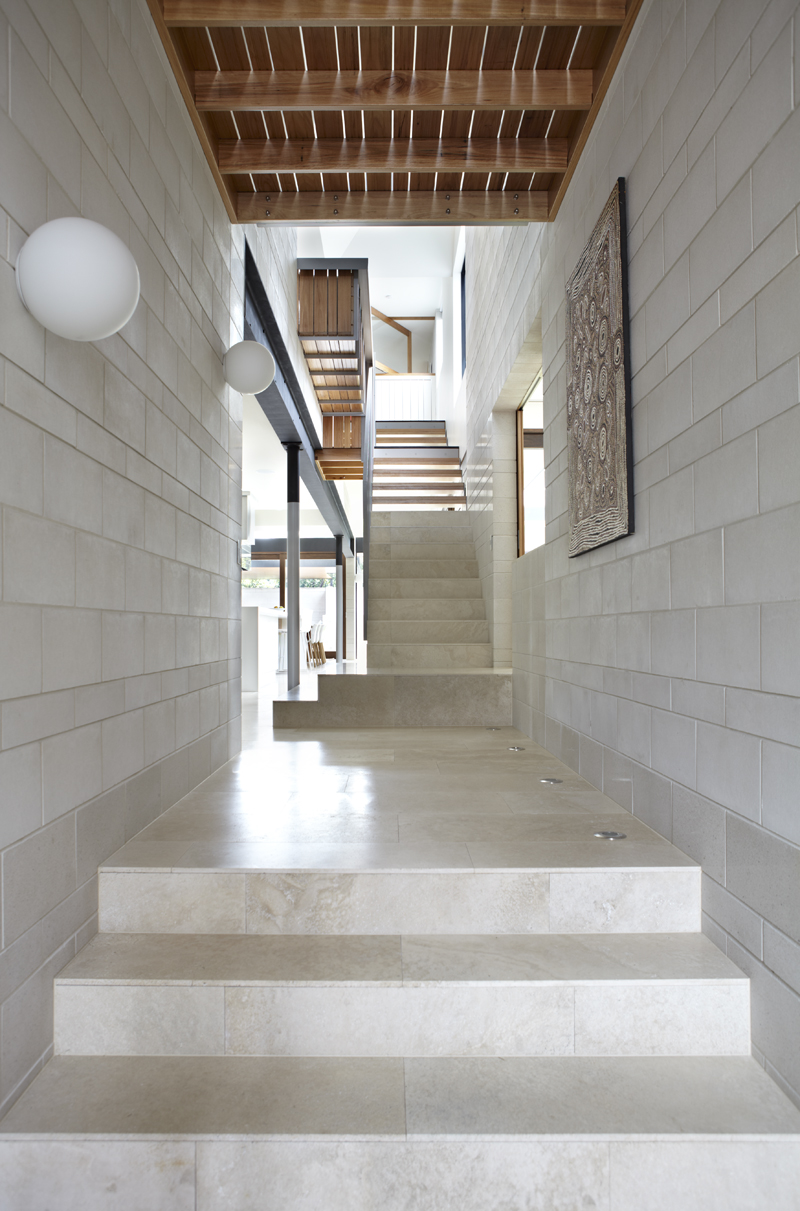
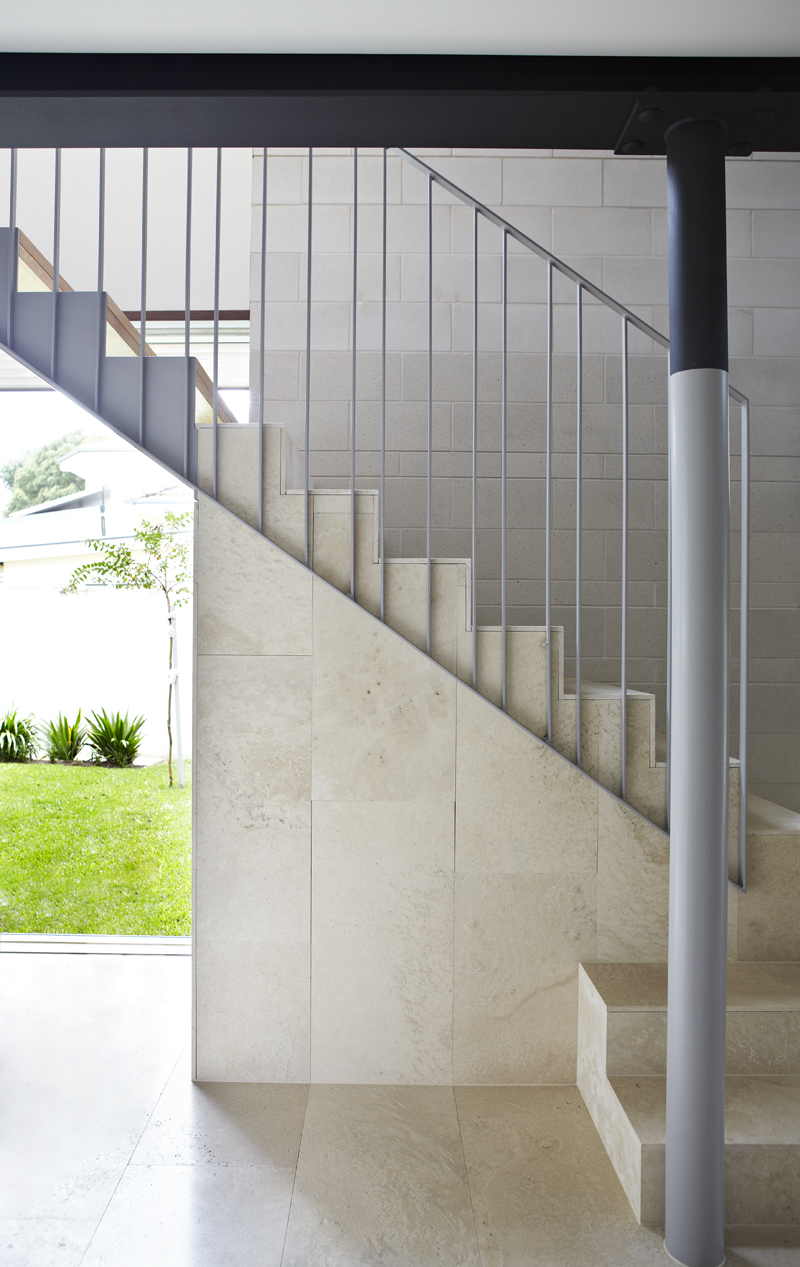
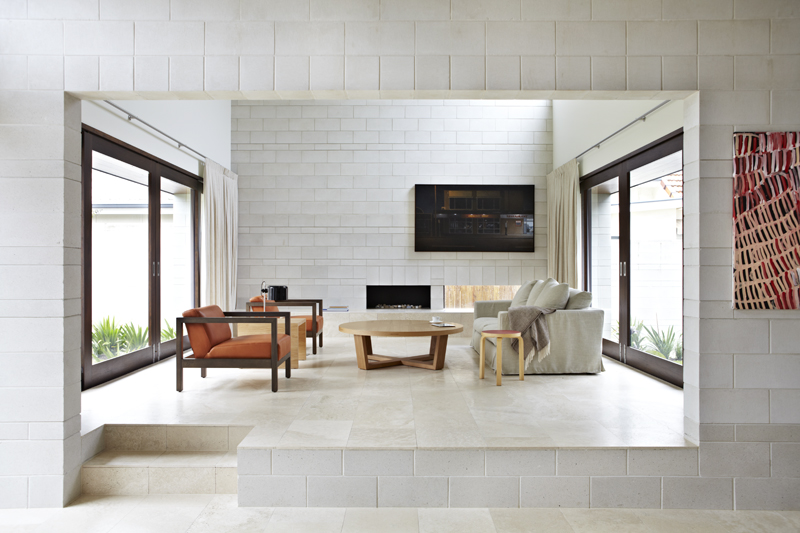
Through a restrained materiality, the Clayfield House further emphasises the natural world outside. Parallel double-height masonry walls run the full length of the site from inside to outside, with the naked masonry taking its cues from an ancient ruin. In this way, it speaks to the idea of built environment becoming subsumed within the environment, while also creating a calm, minimalist interior.
The Clayfield House consists of a hierarchy of volumes, big and small, high and low.
These parallel walls in combination with the central courtyard and large expanses of openable glazing results in an exceptional interconnection of individual spaces within the home, creating layers of indoor and outdoor space. This enables cross-ventilation, which, combined with the substantial thermal mass, benefits the home in its hot, tropical climate.


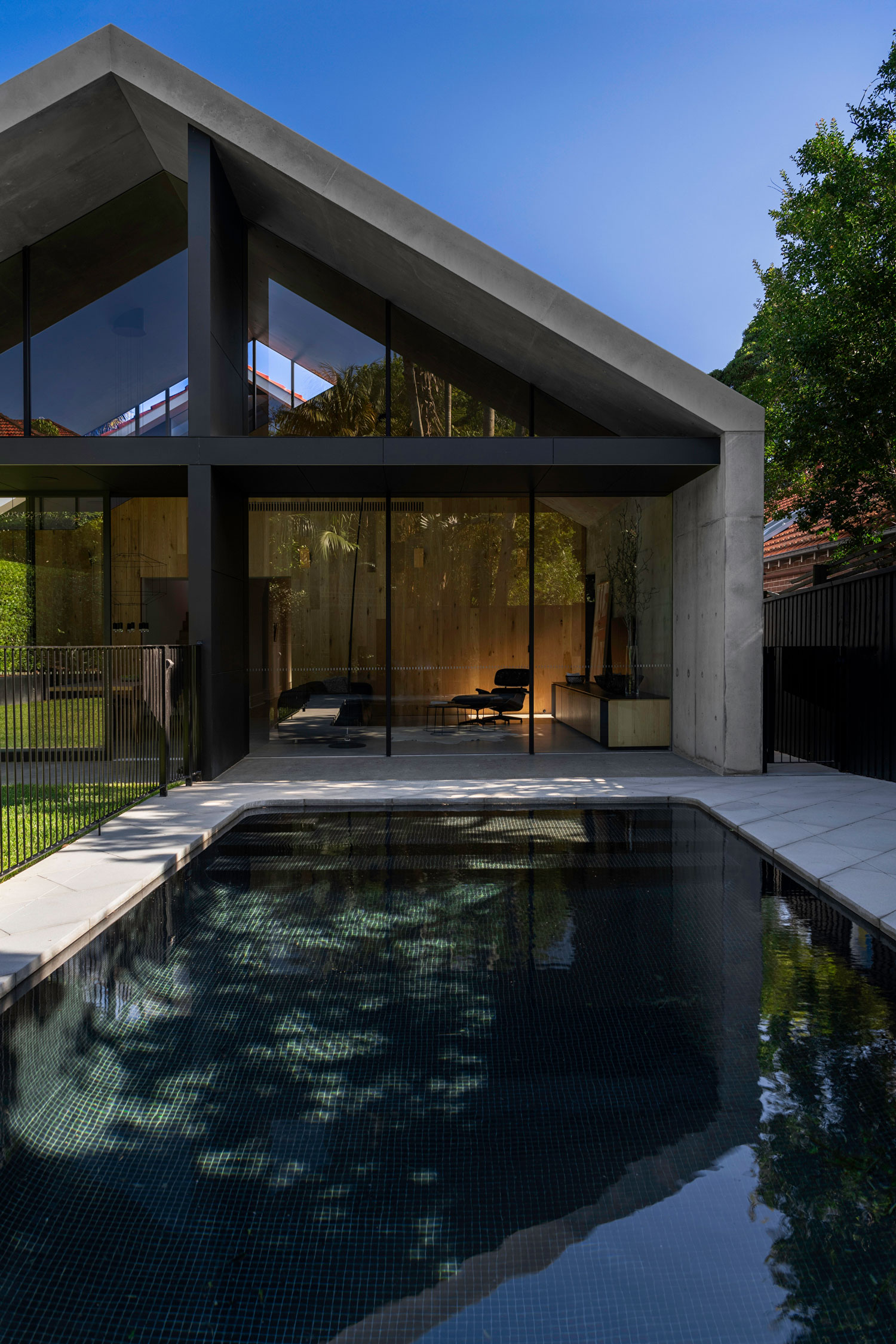
Reversing conventional brick veneer construction, the Clayfield House is clad in timber and metal to a satisfy local town planning covenant for “timber and tin” construction. Utilising external light-weight timber and metal cladding provides a thermal cavity, protecting the masonry from diurnal temperature fluctuations to contribute to a stable, comfortable internal temperature.
Richards and Spence Architects’ Clayfield House adopts a unique architectural approach, focusing the design around a large central courtyard.
The design is similarly efficient in its approach to budget. Masonry blocks in a smooth, polished finish resemble the texture and tone of the travertine flooring, belying their low cost. Timber window and door joinery is limited to the areas of highest impact, while more affordable aluminium standard windows are concealed, emphasising instead the bare masonry forms.


Beginning with its approach to outdoor space in the context of the limited site, in all elements, the Clayfield House demonstrates balance. The bespoke is balanced with inexpensive materials, and indoor and outdoor space are given equal priority. The design’s use of passive design principles keeps the home’s thermal performance in balance, while the smooth, minimalist finish of the masonry walls and stone floors is warmed and softened by timber in key areas. The result is a home that, over six years since it was designed and constructed, is an exemplar of considered design that is not afraid to take the ‘path less travelled’.
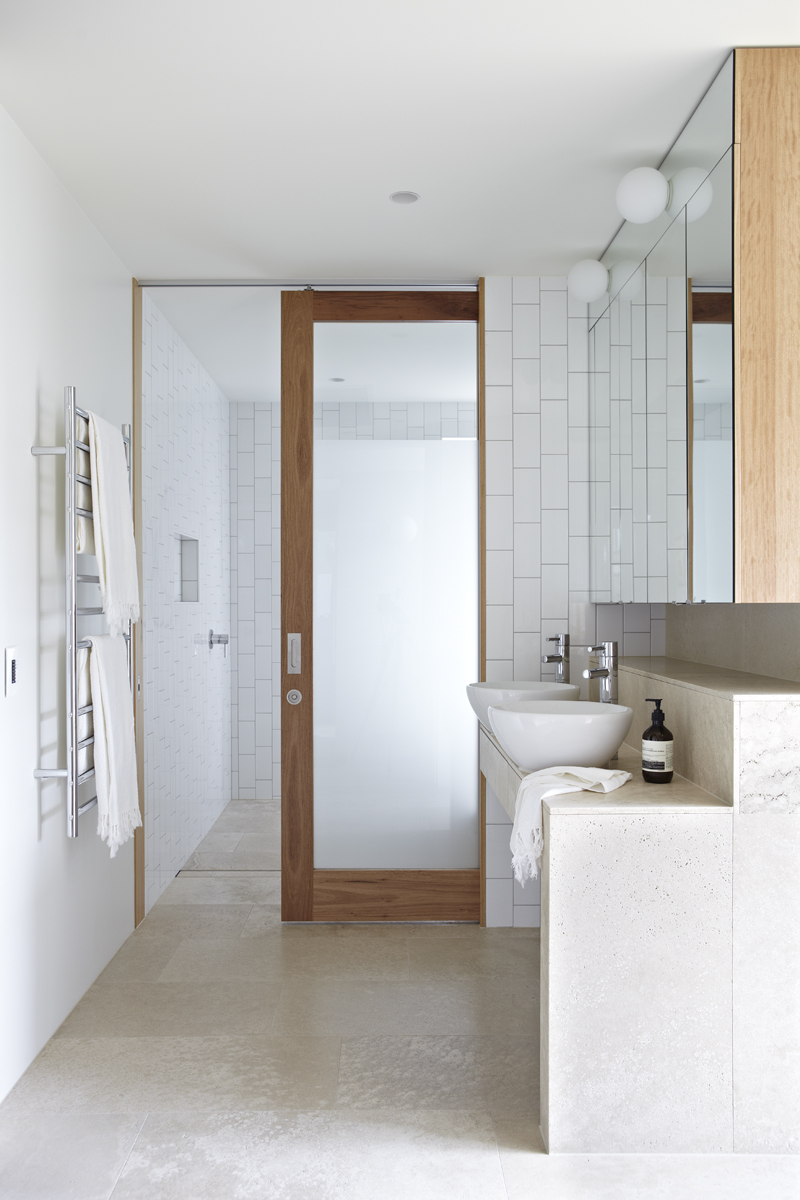
Through a restrained materiality, the Clayfield House further emphasises the natural world outside.